
July 29, 2025
Unseen Struggles: Highlighting Student Wellbeing Through PASS
Wellbeing is more than a catchphrase – it speaks to the heart of each individual. For those working with students of all ages, it can be difficult to accurately assess how each student truly feels – about themselves, their social support networks, and their sense of value within the classroom and wider school community. These feelings have a direct impact on student learning and confidence in their own abilities.
“Student wellbeing is defined as a sustainable state of positive mood and attitude, resilience, and satisfaction with self, relationships and experiences at school.”
– Australian Catholic University 2008, p.66
As educators, we are familiar with the students who appear confident and capable – those who seem to manage most situations with ease. However, there are also those who go unnoticed, or who actively avoid being seen. These students may be struggling with a range of challenges, such as low confidence, motivation, belonging, or performance pressure. The school year is an opportunity not only to help students achieve academically but also to help them realise their value as members of the school community. Teachers dedicate hours to planning lessons that actively engage students in learning. Seeing a student flourish – recognising their abilities and thriving – makes all that effort worthwhile and has a lasting, positive impact.
Understanding whether students feel connected and valued within their school environment is crucial. These perceptions directly affect classroom performance and overall wellbeing. Yet, with limited time during the school day, it can be difficult to determine how students truly feel about school, their work ethic, or the importance of consistent attendance. Trust in their teachers – believing they are supported and understood – is vital. Students with a positive mindset in these areas feel both valued and empowered by their teachers and peers.
When students believe in their own abilities and value themselves, they engage with school more positively – and are better positioned to achieve their potential. A student who approaches schoolwork thinking “I can’t” is unlikely to experience success. A student who believes “I can” builds the mindset necessary for continued achievement. Their confidence, preparedness to learn, and ability to face challenges all contribute to a sense of success and wellbeing.
At times, teachers find it challenging to motivate certain students. Helping students develop self-motivation is key, as this influences their work ethic and response to the demands of the curriculum.
These factors can be difficult to detect and are often missed in traditional academic assessments. This is where PASS (Pupil Attitudes to Self and School) proves invaluable. PASS helps uncover the hidden drivers of student behaviour and performance, providing schools with the evidence to confidently implement proactive support strategies for mental health and engagement – before issues escalate.
A Work in Progress
Wesley College in New Zealand has introduced the PASS programme to build a clearer picture of student wellbeing. Staff have created student profiles and the entire school is involved in supporting students identified as needing additional wellbeing support. This collaborative approach ensures the school creates an environment in which students can grow in confidence and reach their full potential.
“It’s the ‘fall through the cracks’ students that PASS is great in identifying. They may seem happy, arrive on time, their uniform is perfect, but there may be underlying issues. This will be signalled into the learning coaches and pulled into the weekly conferences. We also have a wellbeing register, so any student that we feel is struggling with their wellbeing will be highlighted there.”
– Chris Wood, Deputy Principal, Wesley College NZ
The case study of PASS at Wesley College demonstrates how schools can use these insights to better support their students – improving wellbeing and creating real change for those most at risk.

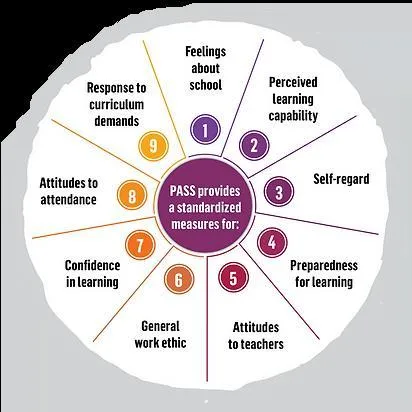
What is PASS?
PASS is an assessment that reveals how students perceive themselves – offering educators the insights needed to shape both the learning environment and curriculum. The goal is to support academic progress while also nurturing a student’s self-image, both now and for the future.
– Quick and accessible – takes just 20 minutes on any device
– Assesses nine core attitudes that help educators understand the “whole student”
– Traffic light reports make it easy to interpret and act on data
– Practical, ready-made interventions ensure timely and sensitive support
– Evidence-led – schools can take action before problems escalate
What Does PASS Assess?
Each factor addresses different aspects of student attitude, grouped into three key areas:
Connectedness:
– Feelings about school
– General work ethic
– Attitudes to attendance
Self-efficacy:
– Perceived learning capability
– Self-regard (intellectual and personal)
– Preparedness for learning
– Confidence in learning
Motivation:
– General work ethic
– Response to curriculum demands
Understanding how each student sees themselves is essential – and ensures every learner is seen, heard, and supported to build a strong sense of wellbeing.
Reference: Australian Catholic University 2008, Scoping Study into Approaches to Student Wellbeing: Report to the Department of Education, Employment and Workplace Relations, https://www.dese.gov.au/download/1033/scoping-study-approaches-student-wellbeing-final-report/764/document/pdf