September 16, 2026
Resource the resource; teacher librarian skills are key.
Shelving the past.
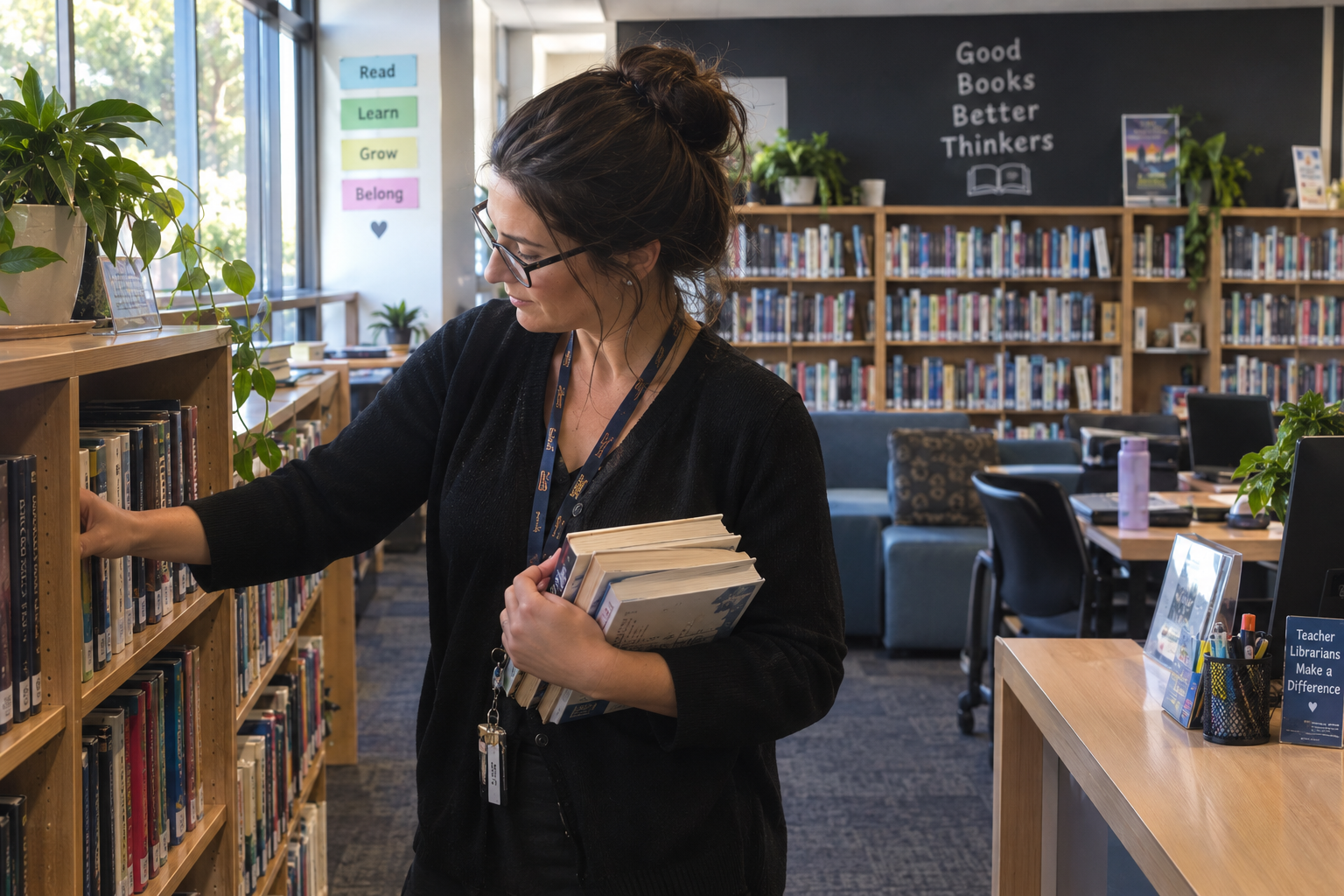
The modern school library is far more than a place to borrow books. Gone are the days of the library being a place where you simply go to get a book, these days libraries and those who work in them, are resource-rich centres of information and learning, staffed by educators expert in their field.
In parts of Australia, some of these experts are being re-deployed to different areas of the education system, creating an opportunity for literacy skills to be front and centre as these schools manage the change.
Investing in literacy
Over time, the role of a librarian has evolved into one better described as a ‘teacher librarian’, a role that reflects the multi-faceted nature and skills that these experts offer to students and teachers. Those that fulfil these roles are specialised in aligning resources with curriculum, co-planning and co-teaching with classroom staff, and explicitly teaching the critical thinking and information literacy skills students need more than ever in an age of generative AI and misinformation.
As some schools in Australia consider different approaches to resourcing this responsibility, now is perhaps the time to seize the moment and highlight how data-led, student-specific reading monitoring and development platforms can strengthen literacy outcomes for students, whoever is at the helm. This clearly does not come without inherent challenges, but these are ones for which the schools involved could look to existing literacy tools in order to ease the transition. In addition, teachers in the classrooms could themselves be supported by the same literacy tools and add to the wealth of support available, creating a strong platform for literacy development school-wide.
Indeed, from our own YouGov/Renaissance research this year, we see that 68% of teachers state that they would use reading more in classrooms if they had the right tools to track progress and engagement. In fact, one teacher felt that reading literacy would benefit from:
“A consistent approach between everyone and working together to support all students no matter what level they are at.” — Australian teacher, Renaissance/YouGov survey, 2026
This approach would dovetail well with a strategy from schools to address literacy skills and reading preferences at a school-wide level, from library to classroom to home. It also underlines a sentiment expressed by 93% of teachers from the same survey that:
‘… students are more motivated to read when books match their level and interests.’
These principles can form part of an effective, whole-school approach to supporting student reading development.
Supporting the need for literacy – tools that empower.
Renaissance Australia has always understood the need to partner with schools in order to help facilitate and nurture effective monitoring and development of literacy skills and now our involvement seems more timely than ever.
Regardless of how literacy responsibilities are structured within a school, there needs to be a credible and consistent strategy that students and educators can rely on.
This is where tools like Renaissance’s Star Reading and Accelerated Reader can help take some of the pressure off. Star Reading, for example, gives users fast, reliable student-reading data that is easily interpretable and is intuitively designed to help monitor student reading growth, comprehension and vocabulary development.
In addition, Accelerated Reader can help by structuring independent reading practice and tracking a student’s progress over time, giving time-poor staff a clear, manageable way to partner with the student at a level appropriate to them and, as we have heard, strengthen the student’s motivation to read.
Both of these tools can be used without a dedicated teacher librarian driving them and are used in many schools already as part of school literacy solutions, Australia-wide.
Partnering for success.
Alongside these literacy-building tools, the expertise and experience offered by qualified teacher librarians and other educators supporting literacy remain valuable assets for schools.
In an age of ‘fake news’, information-overload and endless distractions the student of today needs a trusted guide to help them navigate the noise and make the right literacy choices for their future. By investing in both the educators we need and the tools they need, we will be better equipped to help our students reach their full potential.
At Renaissance Australia, we believe the strongest literacy outcomes come when educators have the expertise, data and tools they need to support every student.